
You pay an agency every month. The report comes in. It has charts, a lot of green arrows, and words like "impressions" and "engagement." You close it and you still do not know the one thing you wanted to know. Is this working?
Here is the fix. Stop reading the report they send. Ask for 7 numbers instead. Every one of them comes from an account you should already own. If your agency cannot give you these, that is an answer too.
1. Cost per lead
Cost per lead is what you spend to get 1 person to call, fill out a form, or start a chat. Take the total ad spend for the month and divide it by the number of leads. That is the number.
Ask for it by channel. Search ads, social ads, and Local Services Ads should each have their own cost per lead. A blended number hides a channel that is bleeding money.
What a good answer looks like: a number, by channel, with the same math every month. What a bad answer looks like: "leads are up" with no cost next to it.
2. Qualified leads, not just leads
A lead is not a customer. A form fill from a job seeker is a lead. A spam call is a lead. Neither one pays you.
Ask how many leads were real. Real means a person your team would want to talk to. This takes a call tracking tool and someone listening to the calls or reading the forms. If nobody is doing that, the cost per lead number above is softer than it looks.
Ask for both numbers side by side. Total leads and qualified leads. The gap between them tells you how clean the targeting is.
3. Cost per customer
This is the number owners actually care about. How much did it cost to win 1 paying customer?
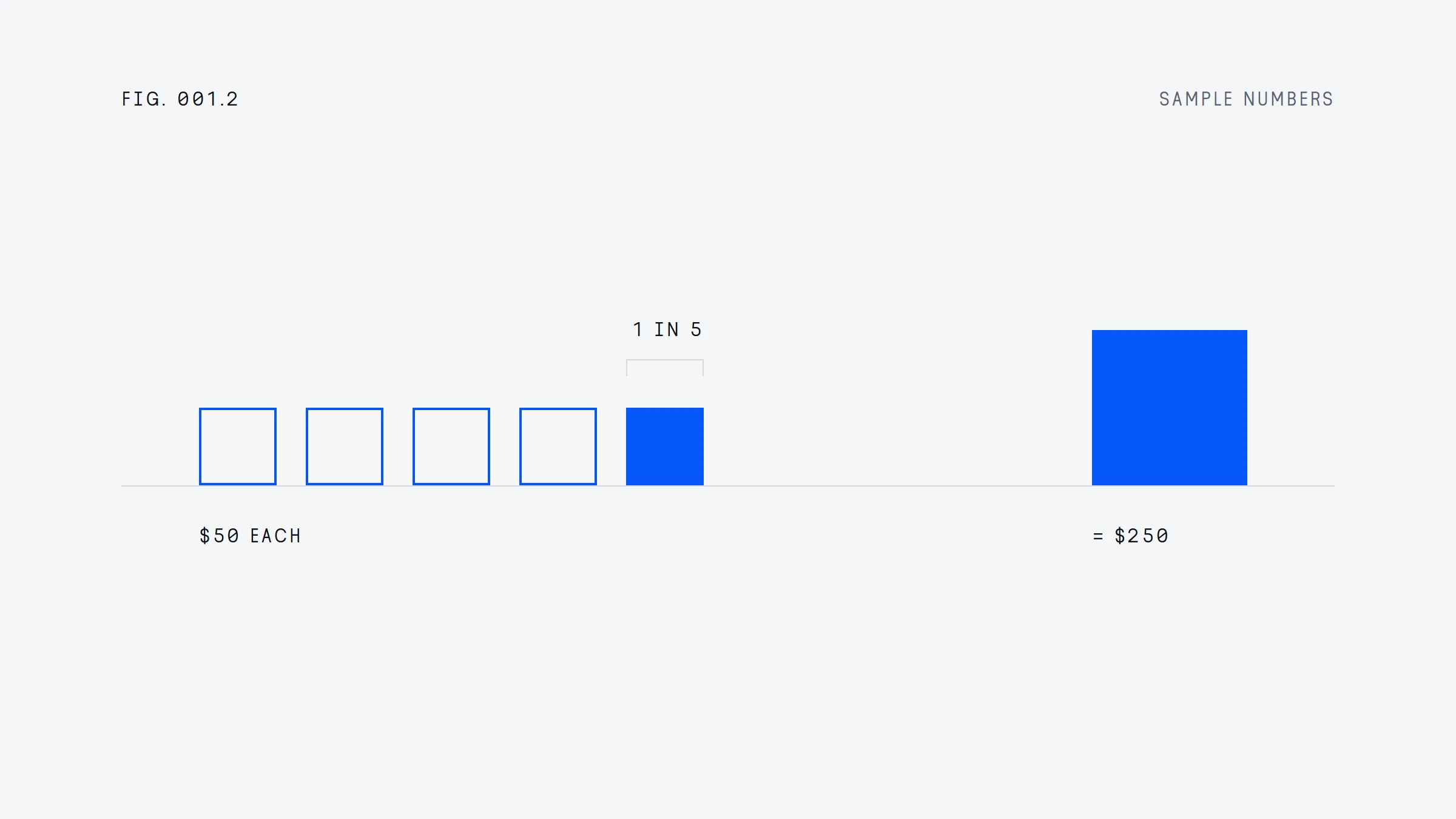
Your agency cannot get this one alone. They need your close rate, which lives in your CRM or your sales notes. Give it to them. Then the math is simple. If a lead costs $50 and you close 1 in 5, a customer costs $250.
If nobody has ever asked you for your close rate, nobody has ever calculated this.
That is worth knowing. It also tells you something about how the account has been run so far.
4. Where every lead came from
Ask for a list of last month's leads with the source next to each one. Google search ad. Organic search. Facebook. Referral. Direct.
This is the number that keeps everyone honest. If the report says paid social drove 40 leads, you should be able to see 40 names, dates, and phone numbers with "paid social" next to them. Our page on the Obsidion portal shows what that looks like when it is done right.
5. Spend by channel, with the change from last month
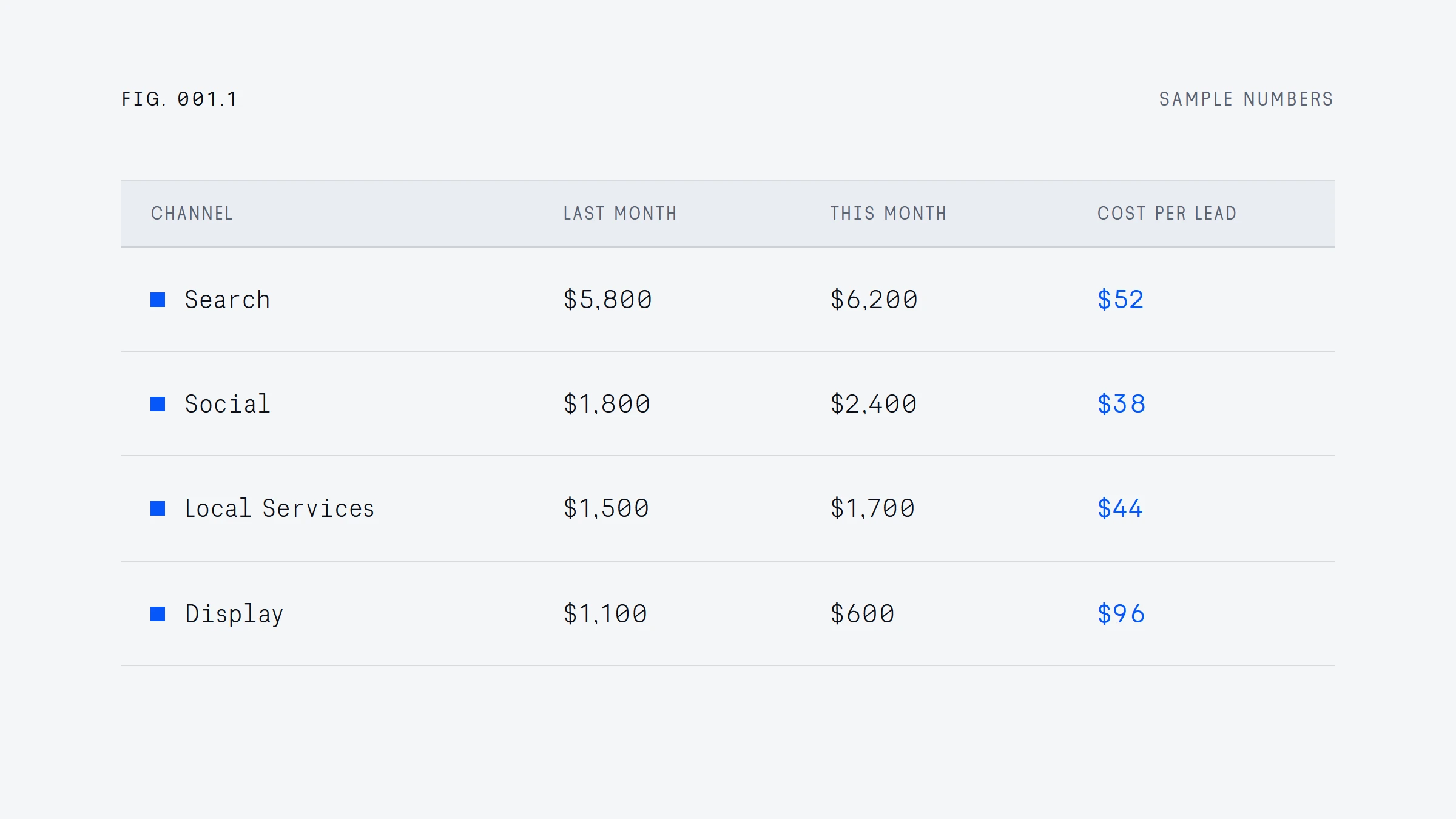
You should know exactly where the money went. Not a pie chart. A table. Search, social, Local Services Ads, display, whatever you run. Dollars this month, dollars last month.
Then look at cost per lead by channel next to it. Did spend move toward the channel with the cheaper leads? It should. If the split never changes, nobody is managing it. Our paid search page walks through how we move budget between channels and why.
6. Rankings and organic leads, together
If you pay for SEO, ask for 2 things. The keywords you rank for, with the position, and the leads that came from organic search.
Rankings alone are easy to make look good. Ranking for a keyword nobody searches is free. So ask for the leads next to the rankings. Position moves that do not turn into calls or forms are not doing much for you yet.
Also ask how long it has been. SEO takes months to show up. That is normal. But "it takes time" should come with a plan and a date, not just patience.
7. What changed, and why
The last number is not a number. It is a list. What did the agency change in your account this month, and what was the reason?
A real answer looks something like this. Paused 3 ad groups with a cost per lead over $120. Added 40 negative keywords from the search term report. Rewrote the landing page headline and the form fill rate moved from 4% to 6%. Short, specific, and tied to a number.
If the answer is vague, the account may be running on autopilot. Ads can run for months with nobody touching them. You would still get a report.
What to do with the answers
Put all 7 in 1 place. A spreadsheet is fine. Add a row every month. In 3 months you will see the trend, and the trend is the truth.
| Number | Where it lives | A good answer |
|---|---|---|
| Cost per lead | Ad platforms, by channel | Same math every month, split by channel |
| Qualified leads | Call tracking and your CRM | Total and qualified, side by side |
| Cost per customer | Your close rate plus the above | A dollar figure, not a ratio |
| Lead sources | Call tracking, forms, analytics | A list with names and a source column |
| Spend by channel | Ad platforms | This month and last, in a table |
| Rankings and organic leads | Search Console, rank tracker, analytics | Positions next to leads, with a date |
| What changed | The agency's own log | Specific changes tied to a number |
Then ask your agency to walk through the numbers on a call. Not a slide deck. The actual accounts, with the screen shared. A good agency will be glad to. Their work should hold up to a close look.
If any of the 7 cannot be answered, you have a tracking problem, a reporting problem, or an agency problem. All 3 can be fixed. Start with tracking, because without it the other numbers are guesses.
One more thing: you should own the accounts
Every number above should live in an account with your name on it. Your Google Ads account. Your analytics. Your call tracking. Your business profiles. The agency gets access. You keep ownership.
If you leave, the history stays with you. If you stay, you can check any number any day without asking. That is how it should be.
Want a second set of eyes on your numbers? Get a free audit. We go through your search, your ads, your site, and your tracking, and tell you what to fix first.