

Local SEO for 1 location is a short list. Claim the Google Business Profile. Build a good page. Get reviews. Keep the name, address, and phone number the same everywhere. Do that well and 1 location can rank.
Then you open location 2. Then 5. Then 20. The list does not get longer. It gets multiplied. And the things that were easy to do once by hand start to break.
This post is about what changes. It applies to a franchise system, a clinic group, a law firm with 3 offices, or a home services company that just crossed into a second metro.
The listing problem becomes an ownership problem
With 1 location, someone claimed the Google Business Profile and that was that. With 20, the question is who owns them. Corporate? The local manager? An old agency? A franchisee who left 2 years ago?
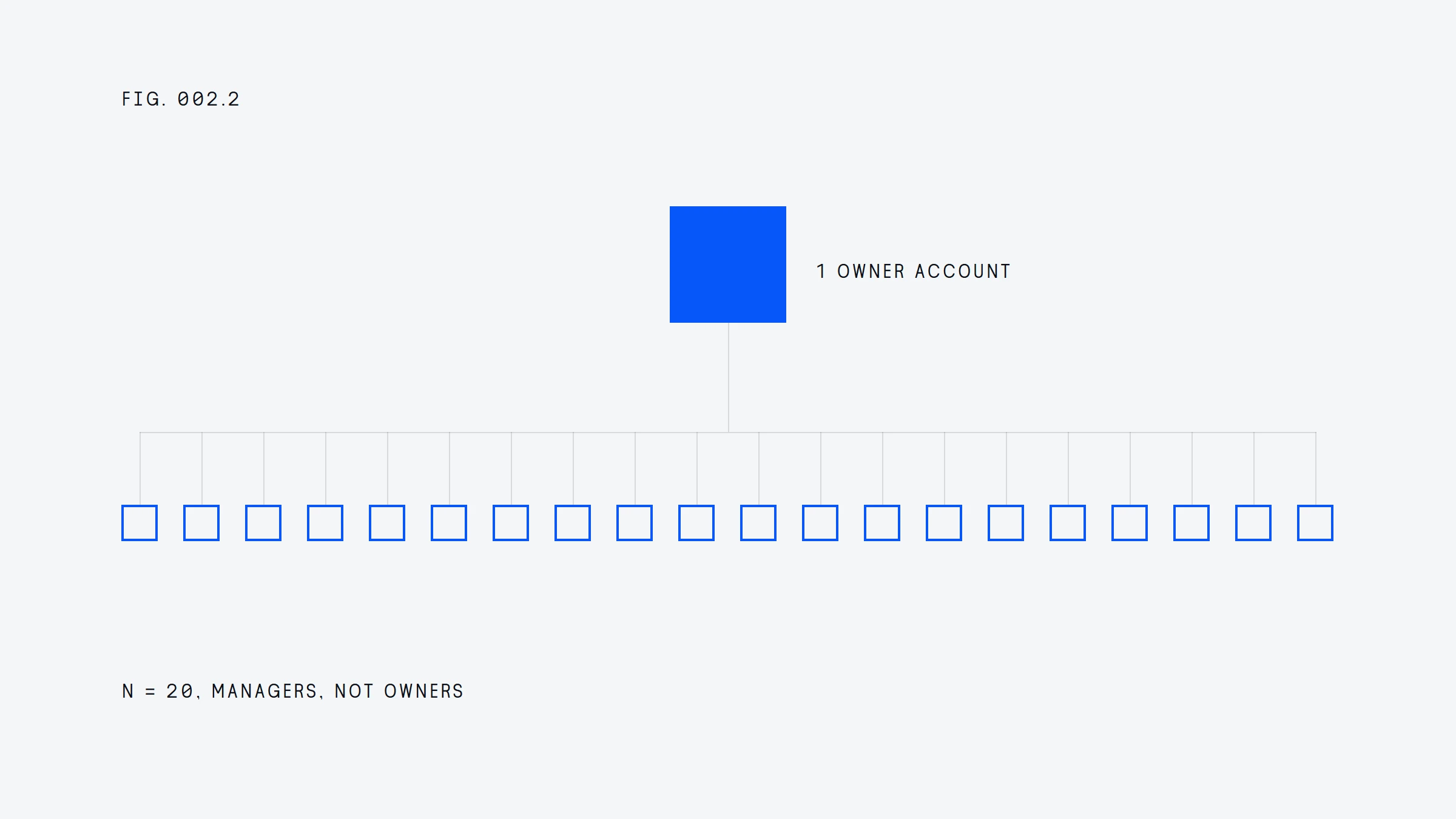
The fix is 1 business account that owns every profile, with local managers added as managers, not owners. Same for Apple Business Connect, Bing Places, and the data aggregators that feed the smaller directories. Get ownership sorted first. Everything else sits on top of it.
Every location needs its own page, and it cannot be a copy
Google ranks pages, not brands.
For a search like "plumber in Aurora," Google wants a page about your Aurora location. Not your homepage. Not a "Locations" page with 20 addresses on it.
So each location gets a page. The trap is making 20 copies of the same page with the city name swapped. Google sees through that, and so do people. Each page needs real local content. The team at that location. The neighborhoods it serves. Reviews from that location. Photos of that office, not stock. Hours, parking, and the phone number that rings there.
This is where most multi-location sites fall down. Building 1 great page is a project. Building 20 is a system, with a template, a content checklist, and someone responsible for filling it in for every new location.
Name, address, and phone at scale
With 1 location you check your name, address, and phone number by hand. With 50, you cannot. And the errors are already out there. An old suite number. A tracking phone number that got submitted as the main line. A location that moved 3 years ago and still shows the old address on 40 sites.
Reviews stop being a favor and start being a process
1 location can ask for reviews when it remembers to. 20 locations need a process. Who asks? When? What does the text message say? Who answers the reviews, and how fast?
2 things matter here. First, every location needs its own review flow, because reviews attach to the location's profile, not the brand. Second, answering matters as much as asking. An unanswered 1-star review at 1 of your locations is visible to everyone searching that city.
Give local managers a simple way to ask, and 1 central person or team the job of answering. That split works.
Tracking has to be by location or it is useless
A single number for "organic leads" means nothing across 20 locations. Location 4 might be booming while location 11 gets no calls at all, and the total looks fine.
Every location page gets its own call tracking number, set up the right way so it does not break your listings. Every form carries the location. Every Google Business Profile gets its own insights pulled into 1 place. Then you can rank locations against each other, find the ones that are behind, and fix them 1 at a time.
Our SEO service page shows how we report this by location, and why we think it is the only way to run it.
Paid and organic have to talk to each other
At 1 location, running Google Ads and doing SEO can be 2 separate jobs. At scale, keeping them separate wastes money. If the Denver page ranks number 1 for the main term, that location may not need to bid on it. If the Tampa page is on page 3, ads have to carry that city while the page catches up.
The same goes for Google Local Services Ads, which show above the normal results for home services, legal, and some other categories. Each location needs its own setup, its own reviews, and its own budget decision.
1 plan, both channels, decided location by location. That is the whole idea.
Local content is not the same as blog content
A blog post about "how to choose a roofer" helps the brand. It does not help the Boise location rank. Local content is different. It is the Boise team, Boise projects, Boise neighborhoods, and Boise events. It lives on or near the Boise page.
Most brands have plenty of the first kind and none of the second. Flip the ratio for a while. The local pages are where the calls come from.
What this looks like as a system
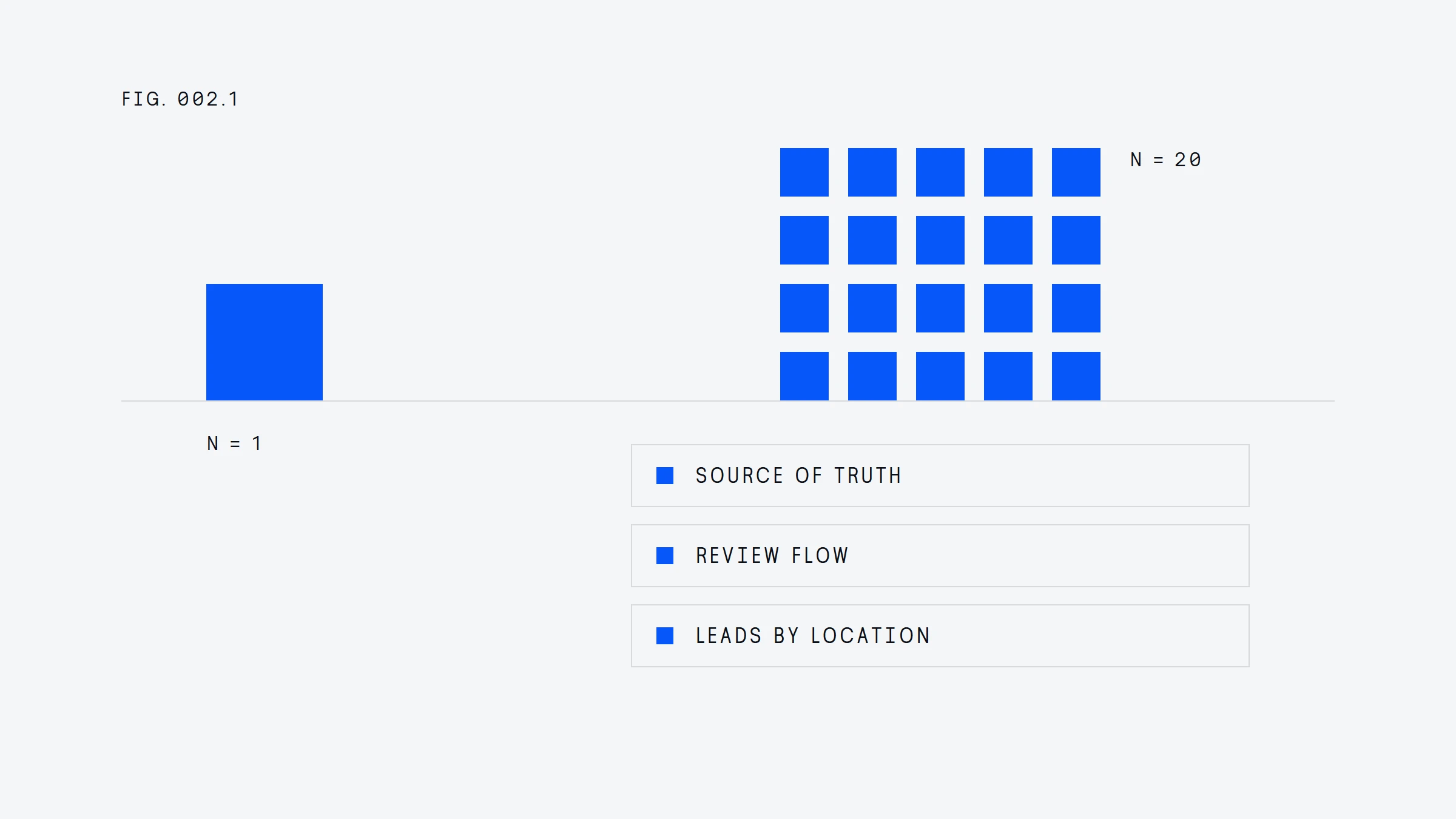
Here is the short version of what changes when you go from 1 location to many:
| Piece | At 1 location | At 20 locations |
|---|---|---|
| Listings | Claimed | Owned in 1 account, checked against a source of truth |
| Pages | A good page | A template plus a local content checklist for every location |
| Reviews | Ask when you remember | A flow per location, 1 team answering |
| Tracking | "Organic leads" | Leads by location, ranked |
| Paid | A separate channel | Budget decided per location, next to the organic data |
None of this is complicated. It is just a lot, and it has to happen for every location, every time. Franchise systems feel this the most, which is why we wrote a separate page on franchise marketing. But a clinic group or a 3-office law firm hits the same wall, just sooner.
Start with an audit of what you have
Before you build any of this, find out where you stand. How many profiles exist, and who owns them. How many location pages exist, and how many are copies. How far off the address data is. Which locations get calls and which do not.
That is exactly what our free audit covers. We go through your listings, your pages, and your tracking, location by location, and hand you the list of what to fix first.